
What does HRV/ERV installation cost in the US in 2026?
Last updated: April 2026
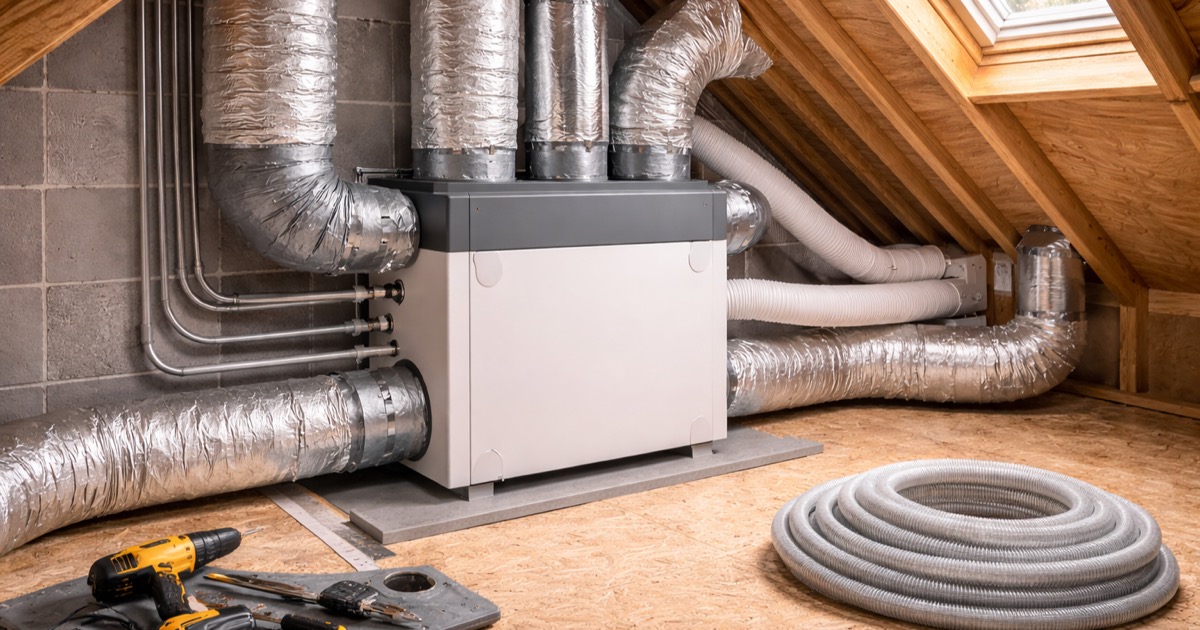
A heat recovery ventilation (HRV) system, also known as mechanical ventilation with heat recovery (MVHR), ensures a healthy indoor climate while recovering heat from the exhaust air. In a well-insulated home, this system is essential: without controlled ventilation, moisture, mold, and poor air quality can develop. This cost guide provides a clear overview of typical 2026 prices, the main cost components, and the choices that make the biggest difference.
Price indications range between $2,000 and $7,500 per installation, based on current 2026 market data. The price differs considerably between a central system with ducts throughout the home and decentralized units per room. In existing construction, installation costs are generally higher because ducts need to be concealed, while in new construction the channels are already incorporated into the build. From 2026, federal tax credit (IRA) is also available as part of an insulation package.
Know someone considering this project?
Share this cost guide in 5 seconds.
Calculate your estimated costs
This is an estimate based on average 2026 prices. Actual costs may vary. Always request multiple quotes for an exact price.
Cost factors
The total cost usually consists of:
- HRV unit and filters: 30-45% of the total
- Ducts, valves, and grilles: 20-30% of the total
- Installation and commissioning: 25-35% of the total
- Concealment and finishing: 5-15% of the total
These percentages can vary depending on the type of system, the home size, and the complexity of the ductwork in existing construction.
Why do prices vary?
- Central vs. decentralized system: A central HRV system with ducts serves the entire home but requires more installation time and concealment costs. Decentralized units per room are easier to install but less efficient for larger homes.
- Capacity and home size: System capacity is expressed in m3/h and must be matched to the volume of the home and the number of occupants. An undersized system will not ventilate sufficiently.
- Existing construction vs. new build: In existing construction, ducts often need to be concealed in dropped ceilings or along walls, significantly increasing costs. In new builds, the ducts are already integrated into the structure.
- System efficiency (heat recovery rate): The best systems achieve a heat recovery rate of 90% or higher. This significantly reduces heating costs, but the unit purchase price is higher.
Regional price differences
Choose a city to view local prices and availability.
Is your city not listed?
View all plumbing & heating professionalsFrequently asked questions
Related cost guides
EV charger installation
EV charger installation costs in the US in 2026. Level 2 home charging with 30% federal tax credit up to $1,000.
Underfloor heating installation
Radiant floor heating costs per m² in the US in 2026. Compare electric vs. hydronic systems with installation prices.
Bathroom renovation
Complete guide to bathroom remodel costs in the US in 2026. From cosmetic updates to full gut renovations with ROI insig...