
Heat recovery ventilation installation in Milwaukee
Prices are valid for 2026 and are indicative
Here you can see what heat recovery ventilation installation in Milwaukee costs on average. We explain what the price consists of and which local factors have the biggest impact.
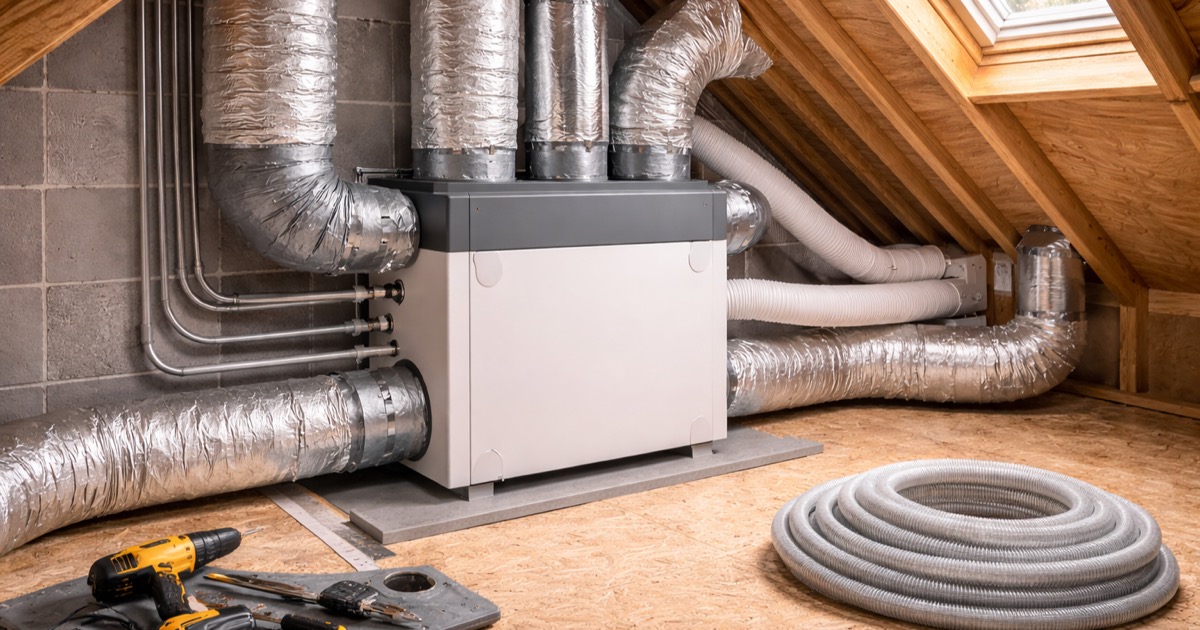
Price indications range between $2,000 and $7,500 per installation, based on current 2026 market data. The price differs considerably between a central system with ducts throughout the home and decentralized units per room. In existing construction, installation costs are generally higher because ducts need to be concealed, while in new construction the channels are already incorporated into the build. From 2026, federal tax credit (IRA) is also available as part of an insulation package.
Know someone in Milwaukee considering this project?
Share this local price indication in 5 seconds.
Local price
$1,425 - $5,700
5% lower than average
Average response time
-
No response time known yet
Calculate your estimated costs
This is an estimate based on average 2026 prices. Actual costs may vary. Always request multiple quotes for an exact price.
Cost factors
The total cost usually consists of:
- HRV unit and filters: 30-45% of the total
- Ducts, valves, and grilles: 20-30% of the total
- Installation and commissioning: 25-35% of the total
- Concealment and finishing: 5-15% of the total
These percentages can vary depending on the type of system, the home size, and the complexity of the ductwork in existing construction.
Why do prices vary?
- Central vs. decentralized system: A central HRV system with ducts serves the entire home but requires more installation time and concealment costs. Decentralized units per room are easier to install but less efficient for larger homes.
- Capacity and home size: System capacity is expressed in m3/h and must be matched to the volume of the home and the number of occupants. An undersized system will not ventilate sufficiently.
- Existing construction vs. new build: In existing construction, ducts often need to be concealed in dropped ceilings or along walls, significantly increasing costs. In new builds, the ducts are already integrated into the structure.
- System efficiency (heat recovery rate): The best systems achieve a heat recovery rate of 90% or higher. This significantly reduces heating costs, but the unit purchase price is higher.
Local considerations in Milwaukee
Favorable (-5%)Favorable pricing with strong value in older housing and a cold-weather market that rewards insulation and durable materials
Housing characteristics in Milwaukee
Milwaukee's housing stock features classic bungalows, duplexes, and sturdy brick homes from the late 19th and early 20th centuries, plus more conventional postwar suburbs. Cold winters near Lake Michigan make insulation, air sealing, heating reliability, and ice-dam prevention major priorities. Many homeowners also budget for basement waterproofing, tuckpointing, and window replacement as part of broader renovation work.
- bungalows, duplexes, and brick homes are common
- lake-effect winters raise insulation and roof demands
- older basements often need drainage and masonry work
- lower overhead costs for contractors
- less scheduling pressure and faster project starts
- local contractors with strong community reputation
- central vs. decentralized system and property type determine installation complexity
- federal tax credit (IRA) possible as part of an insulation package from 2026
Handymen for Heat recovery ventilation installation
Are you a professional?
Join the network and receive new requests.