
What does a green roof cost in the UK in 2026?
Last updated: April 2026
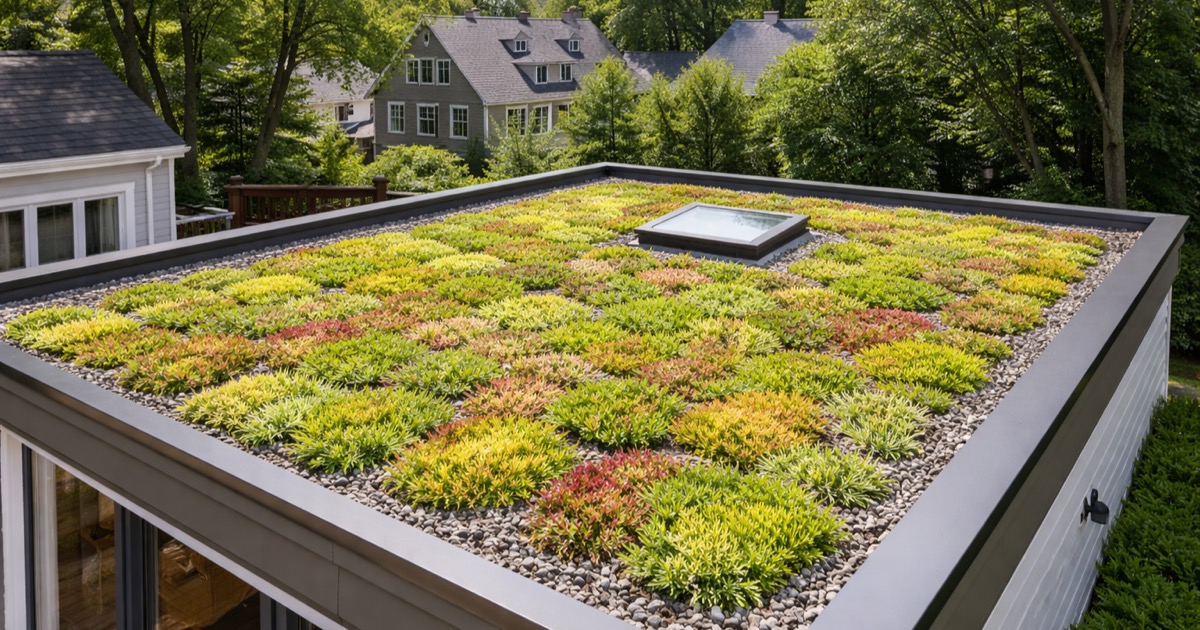
A green roof (or living roof) is a roof partially or fully covered with vegetation, typically planted over a waterproof membrane and drainage layer. They are popular in the UK for their environmental benefits — biodiversity support, urban heat island reduction, stormwater attenuation, and improved building insulation.
In the UK, green roofs fall into two main categories: extensive (shallow substrate, 60–150 mm deep, low-maintenance plants like sedum) and intensive (deeper substrate, 150 mm+, capable of supporting grass, shrubs, or even small trees). Extensive sedum roofs are the most common residential choice.
Installed costs range from £60–£120 per m² for extensive sedum roofs to £120–£200+ per m² for biodiverse or intensive systems. A typical flat-roof extension or garage roof of 20–30 m² would cost £2,000–£5,000 installed.
Know someone considering this project?
Share this cost guide in 5 seconds.
Calculate your estimated costs
This is an estimate based on average 2026 prices. Actual costs may vary. Always request multiple quotes for an exact price.
Cost factors
Green roof installation costs in the UK, including waterproofing membrane, drainage layer, substrate, and planting.
- Extensive sedum roof (20–30 m²): £1,500–£4,000
- Biodiverse/brownfield roof (20–30 m²): £2,500–£5,000
- Intensive planted roof (per m²): £150–£300 per m²
- Waterproof membrane replacement (if needed): £30–£80 per m²
- Structural assessment (if required): £500–£1,500
- Irrigation system (for intensive roofs): £500–£2,000
Prices assume a structurally sound existing roof. Extensive sedum systems weigh 60–120 kg/m² when saturated — a structural assessment is recommended for retrofits.
Why do prices vary?
- Green roof type: Extensive sedum roofs are the most affordable and lowest maintenance. Intensive roofs can support lawns and shrubs but require more structural support and regular maintenance.
- Roof structure and load bearing capacity: Existing flat roofs must be assessed for their ability to bear the additional load of a green roof — particularly when saturated. Older or lighter structures may need reinforcement.
- Roof pitch: Green roofs work best on flat or low-pitched roofs (up to 10–15°). Steeper pitches require special retention systems, adding cost.
- Accessibility: Accessible intensive roofs (rooftop gardens) cost significantly more than inaccessible extensive roofs due to safety balustrades, access hatches, and loading requirements.
- Local planning requirements: Some London boroughs and other councils actively encourage or require green roofs on new developments. Check if your project qualifies for planning incentives.
Subsidies & incentives
No specific residential green roof grant exists in the UK. However, green roofs can contribute to biodiversity net gain credits under England's mandatory BNG framework (since February 2024), which may have planning and development value. Some local authorities (particularly in London and Bristol) actively incentivise green roofs. VAT at 20% applies to green roof installation for residential properties.
Regional price differences
Choose a city to view local prices and availability.
Is your city not listed?
View all roofing professionalsFrequently asked questions
Related cost guides
Asbestos removal
Asbestos removal costs £500–£3,000 for small residential jobs in the UK. Only licensed contractors can remove high-risk...
Interior painting
Interior painting costs £150–£400 per room in the UK for a professional finish. Find out what painters charge per day an...
Dormer installation
A dormer loft conversion costs £35,000–£75,000 in the UK. Find out about dormer types, planning permission requirements,...