
Green roof installation in Glasgow
Prices are valid for 2026 and are indicative
Here you can see what green roof installation in Glasgow costs on average. We explain what the price consists of and which local factors have the biggest impact.
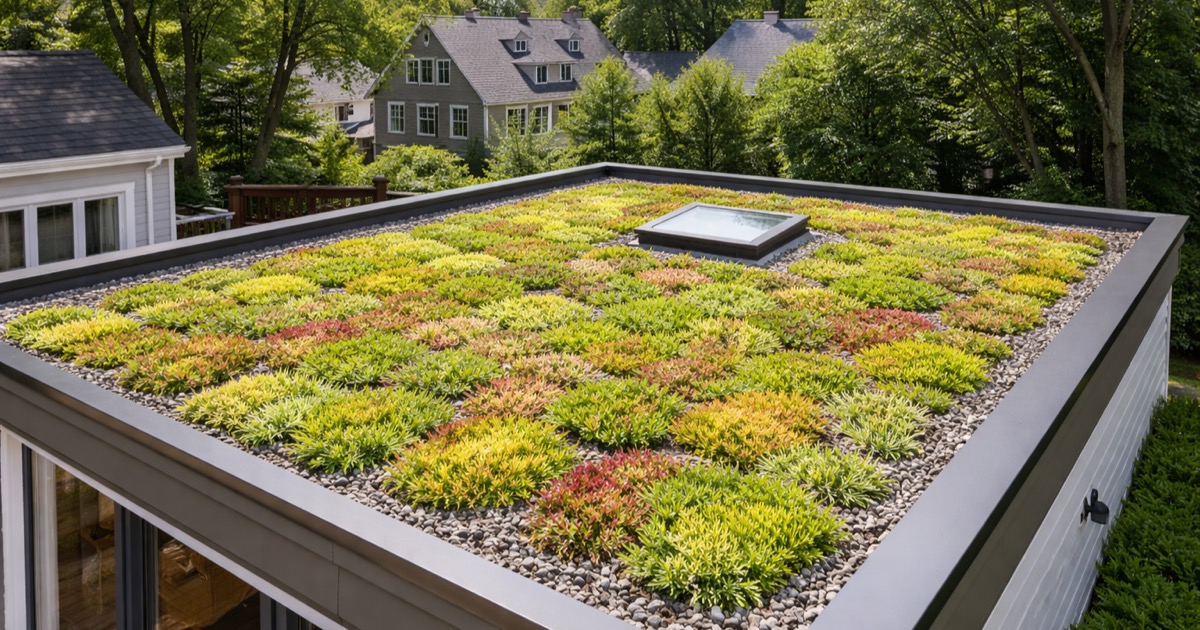
In the UK, green roofs fall into two main categories: extensive (shallow substrate, 60–150 mm deep, low-maintenance plants like sedum) and intensive (deeper substrate, 150 mm+, capable of supporting grass, shrubs, or even small trees). Extensive sedum roofs are the most common residential choice.
Installed costs range from £60–£120 per m² for extensive sedum roofs to £120–£200+ per m² for biodiverse or intensive systems. A typical flat-roof extension or garage roof of 20–30 m² would cost £2,000–£5,000 installed.
Know someone in Glasgow considering this project?
Share this local price indication in 5 seconds.
Local price
£60 - £200
Average price
Average response time
-
No response time known yet
Calculate your estimated costs
This is an estimate based on average 2026 prices. Actual costs may vary. Always request multiple quotes for an exact price.
Cost factors
Green roof installation costs in the UK, including waterproofing membrane, drainage layer, substrate, and planting.
- Extensive sedum roof (20–30 m²): £1,500–£4,000
- Biodiverse/brownfield roof (20–30 m²): £2,500–£5,000
- Intensive planted roof (per m²): £150–£300 per m²
- Waterproof membrane replacement (if needed): £30–£80 per m²
- Structural assessment (if required): £500–£1,500
- Irrigation system (for intensive roofs): £500–£2,000
Prices assume a structurally sound existing roof. Extensive sedum systems weigh 60–120 kg/m² when saturated — a structural assessment is recommended for retrofits.
Why do prices vary?
- Green roof type: Extensive sedum roofs are the most affordable and lowest maintenance. Intensive roofs can support lawns and shrubs but require more structural support and regular maintenance.
- Roof structure and load bearing capacity: Existing flat roofs must be assessed for their ability to bear the additional load of a green roof — particularly when saturated. Older or lighter structures may need reinforcement.
- Roof pitch: Green roofs work best on flat or low-pitched roofs (up to 10–15°). Steeper pitches require special retention systems, adding cost.
- Accessibility: Accessible intensive roofs (rooftop gardens) cost significantly more than inaccessible extensive roofs due to safety balustrades, access hatches, and loading requirements.
- Local planning requirements: Some London boroughs and other councils actively encourage or require green roofs on new developments. Check if your project qualifies for planning incentives.
Subsidies & incentives
No specific residential green roof grant exists in the UK. However, green roofs can contribute to biodiversity net gain credits under England's mandatory BNG framework (since February 2024), which may have planning and development value. Some local authorities (particularly in London and Bristol) actively incentivise green roofs. VAT at 20% applies to green roof installation for residential properties.
Local considerations in Glasgow
Average (baseline)Scotland's largest city — competitive trade rates, distinctive tenement housing, and Scottish building regulations apply.
Housing characteristics in Glasgow
Glasgow is Scotland's largest city and one of the UK's great Victorian industrial cities, with a housing stock dominated by the famous Glasgow sandstone tenements — four- to six-storey flatted buildings built between 1870 and 1914, constructed from honey-coloured or red-brown sandstone quarried from nearby Ayrshire and Renfrewshire. These tenements are the dominant housing type across the West End (Hyndland, Dowanhill, Partick), the South Side (Shawlands, Queens Park, Govanhill), and inner east Glasgow. Tenement flats require collective decisions for roof, stonework, and close (communal stairwell) maintenance — all co-owners must agree on common works, which can delay urgent repairs. Stone repointing must use lime mortar rather than cement — incorrect pointing traps moisture and causes expensive long-term damage. Scottish building regulations (Building Standards in Scotland) differ from England's Building Regulations — always verify which standards apply. The Home Energy Scotland scheme offers grants of up to £9,000 and interest-free loans of up to £15,000 for energy improvements, supplementing UK-wide ECO4 funding and the Boiler Upgrade Scheme. Glasgow's wet climate (one of the wettest major UK cities, approximately 1,200 mm per year) and cold winters make insulation investment highly valuable. The city's industrial heritage and skilled trades workforce mean good access to specialist skills.
- Glasgow sandstone tenements require specialist stonemasonry for repairs
- Scottish building regulations — different from England and Wales
- Home Energy Scotland grants and loans supplement UK-wide schemes
- High rainfall and cold winters drive strong insulation and heating demand
- standard Building Regulations and planning requirements
- broad selection of local and regional contractors
- typical scheduling availability throughout the year
- Structural assessment recommended for retrofits — extensive sedum adds 60–120 kg/m² when saturated
- Root-resistant waterproof membrane essential — standard bitumen membranes not suitable
- 20% VAT applies — no reduced rate for green roofs
- Biodiversity net gain: green roofs can contribute to mandatory BNG requirements for new developments
Handymen for Green roof installation
Are you a professional?
Join the network and receive new requests.