
Floor insulation in Austin
Prices are valid for 2026 and are indicative
Here you can see what floor insulation in Austin costs on average. We explain what the price consists of and which local factors have the biggest impact.
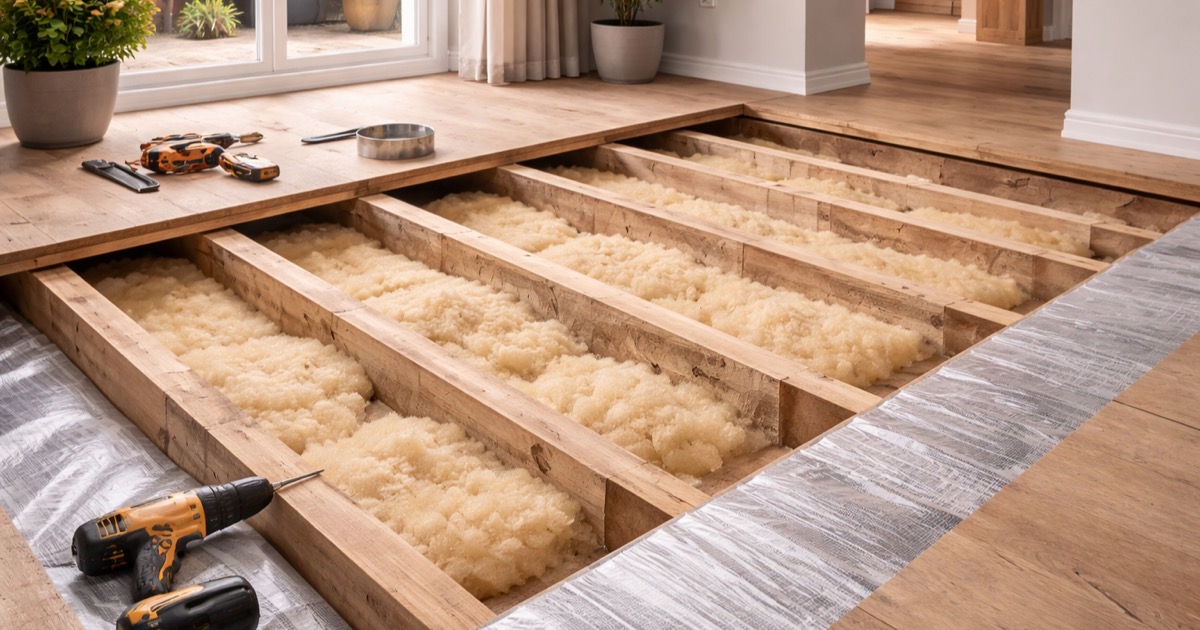
The cost of floor insulation ranges from $15 to $55 per m², depending on the insulation method and material. Underfloor insulation via a membrane in the crawl space is the cheapest solution ($15-$25/m²) but insulates less effectively than PUR or PIR boards fixed to the underside of the floor ($30-$55/m²). For homes without a crawl space (on a concrete slab foundation), blown-in insulation or a completely new floor system is required. The federal tax credit (IRA) makes floor insulation particularly attractive, especially when combined with another insulation measure.
Know someone in Austin considering this project?
Share this local price indication in 5 seconds.
Local price
$12 - $81
8% higher than average
Average response time
-
No response time known yet
Calculate your estimated costs
This is an estimate based on average 2026 prices. Actual costs may vary. Always request multiple quotes for an exact price.
Cost factors
The total cost usually consists of:
- Insulation material (PUR/PIR/membrane/blown-in): 40-55% of the total
- Installation labor: 30-40% of the total
- Crawl space or floor preparation: 8-15% of the total
- Fixings and finishing: 5-10% of the total
These percentages can vary depending on the insulation method, floor type, and accessibility of the crawl space.
Why do prices vary?
- Type of insulation method: Underfloor insulation via a membrane in the crawl space ($15-$25/m²) is affordable and quick to install. Fixing PUR/PIR boards to the underside of the floor ($30-$55/m²) gives a higher Rd-value. Blown-in insulation ($20-$40/m²) suits difficult-to-access spaces. Above-floor insulation requires a new screed, significantly increasing costs.
- Crawl space presence and accessibility: Homes with a well-accessible crawl space (height > 50 cm) are best suited for underfloor membrane insulation and board insulation from below. For a low or poorly accessible crawl space (< 30 cm), blown-in or above-floor insulation are the only options, which cost more.
- Floor type: timber versus concrete: Timber floors can be effectively insulated by placing insulation boards between the joists. Concrete ground-floor slabs are insulated via crawl space underfloor insulation or by laying a new floating screed on top, which requires extra height (minimum 60-80 mm).
- Surface: IRA minimum and maximum limits: The federal tax credit (IRA) applies to a minimum surface of 20 m² and a maximum of 130 m². For homes with a ground floor smaller than 20 m² (e.g. small apartments), the federal tax credit (IRA) application for floor insulation is not eligible.
Subsidies & incentives
Floor and crawl space insulation qualifies for the same federal incentives as other insulation types.Energy Efficient Home Improvement Credit (IRA Section 25C)Amount: 30% of material costs, up to $1,200 per year (shared with other insulation)Applies to: fiberglass batts, spray foam, and rigid board for floors and crawl spacesThe $1,200 annual cap is shared across all insulation types (wall, roof, floor). Plan your upgrades strategically across tax years to maximize your total credit.
Local considerations in Austin
Above average (+8%)Above-average pricing driven by rapid in-migration, infill demand, and a very active ADU and renovation market
Housing characteristics in Austin
Austin combines Central Austin bungalows, ranch homes from the 1950s-70s, and expansive newer suburbs across the metro. The city's growth has kept skilled trades in high demand, especially for additions, remodels, outdoor living upgrades, and garage conversions. Heat, sun exposure, and occasional foundation movement from local soils make shading, drainage, insulation, and HVAC sizing recurring project concerns.
- mix of older bungalows and fast-growing suburban development
- strong ADU, addition, and garage conversion market
- intense summer heat keeps insulation and cooling upgrades important
- competitive contractor market with varied pricing
- mix of older and newer housing stock
- good availability of specialized tradespeople
- presence, height, and accessibility of the crawl space determine the insulation method
- federal tax credit (IRA) applies to a minimum of 20 m² and a maximum of 130 m² of floor surface
Handymen for Floor insulation
Are you a professional?
Join the network and receive new requests.