
Combien coûte l’isolation de murs creux en France en 2026 ?
Derniere mise a jour: avril 2026
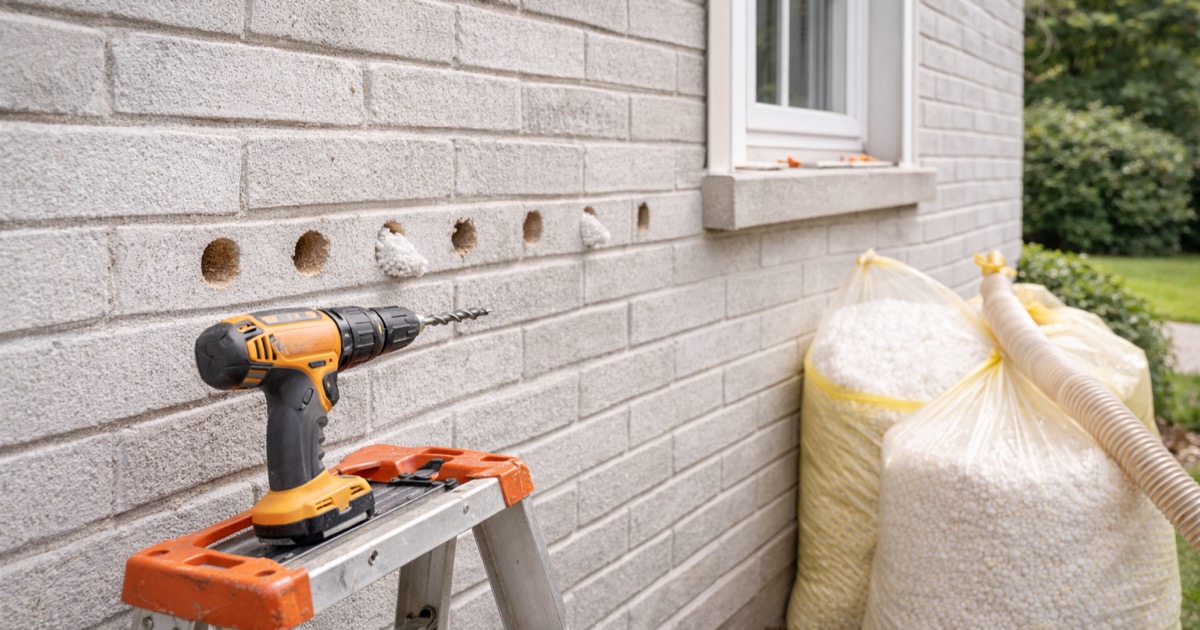
En France, l’isolation de murs creux par insufflation coûte généralement entre €1 500 et €4 500 par chantier standard. En France, le prix dépend de la surface réellement injectée, de l’état des façades, du type d’isolant et de la présence éventuelle d’humidité ou de ponts thermiques.
Cette fourchette correspond au marché observé en 2026 pour des chantiers réalisés par des entreprises françaises, hors gros imprévu structurel ou très haut de gamme.
Connaissez-vous quelqu'un qui envisage ce projet ?
Partagez ce guide de prix en 5 secondes.
Calculez vos coûts estimés
Voir les informations sur les aides
Il s'agit d'une estimation basée sur les prix moyens de 2026. Les coûts réels peuvent varier. Demandez toujours plusieurs devis pour obtenir un prix précis.
Facteurs de cout
Pour ce type de chantier en France, le coût final dépend surtout de la surface, de la préparation du support et de l’isolant choisi.
- Isolant et accessoires: 35-55 % du total
- Main-d’œuvre: 25-40 % du total
- Préparation et protection: 10-20 % du total
- Finitions et contrôle: 5-10 % du total
Les prix augmentent vite quand il faut traiter l’humidité, déposer l’existant ou reprendre les finitions.
Pourquoi les prix varient-ils ?
- Diagnostic du mur: Un mur humide ou mal ventilé peut rendre l’injection inadaptée ou plus chère.
- Type d’isolant: Billes, laine minérale ou autre solution ne donnent pas le même coût ni les mêmes performances.
- Surface et accessibilité: Échafaudage, façade haute ou accès compliqué augmentent le prix de pose.
- Ponts thermiques: Les liaisons plancher et menuiseries peuvent demander un traitement complémentaire.
Primes et aides
Pour l’isolation en France, les aides nationales les plus fréquentes passent par un parcours France Rénov’ avec travaux éligibles et entreprise RGE.
MaPrimeRénov’
L’aide varie selon les revenus, le logement et la performance atteinte.
- demande à déposer avant signature ferme du devis
- travaux à faire réaliser par une entreprise RGE
- le montant dépend du geste, des revenus et parfois du parcours de rénovation
CEE, éco-PTZ et TVA réduite
Ces leviers peuvent compléter MaPrimeRénov’ sur beaucoup de chantiers d’isolation.
- prime CEE possible via un obligé ou un partenaire énergie
- éco-prêt à taux zéro pour lisser le reste à charge
- TVA à 5,5 % pour des travaux d’amélioration énergétique éligibles
Differences de prix regionales
Choisissez une ville pour voir les prix locaux et les disponibilites.
Votre ville n est pas reprise ?
Voir tous les professionnels en isolationQuestions frequentes
Guides de prix similaires
Isolation de toiture
Prix d’une isolation de toiture en France en 2026 : rampants, combles, sarking, aides et contraintes de chantier.
Isolation du sol
Prix d’une isolation de sol en France en 2026 : plancher bas, dalle, accessibilité et aides énergétiques.
Installation domotique
Prix d’une installation domotique en France en 2026 : équipements connectés, câblage, centralisation et niveau d’intégra...