
What does an EV charger installation cost in the UK in 2026?
Last updated: April 2026
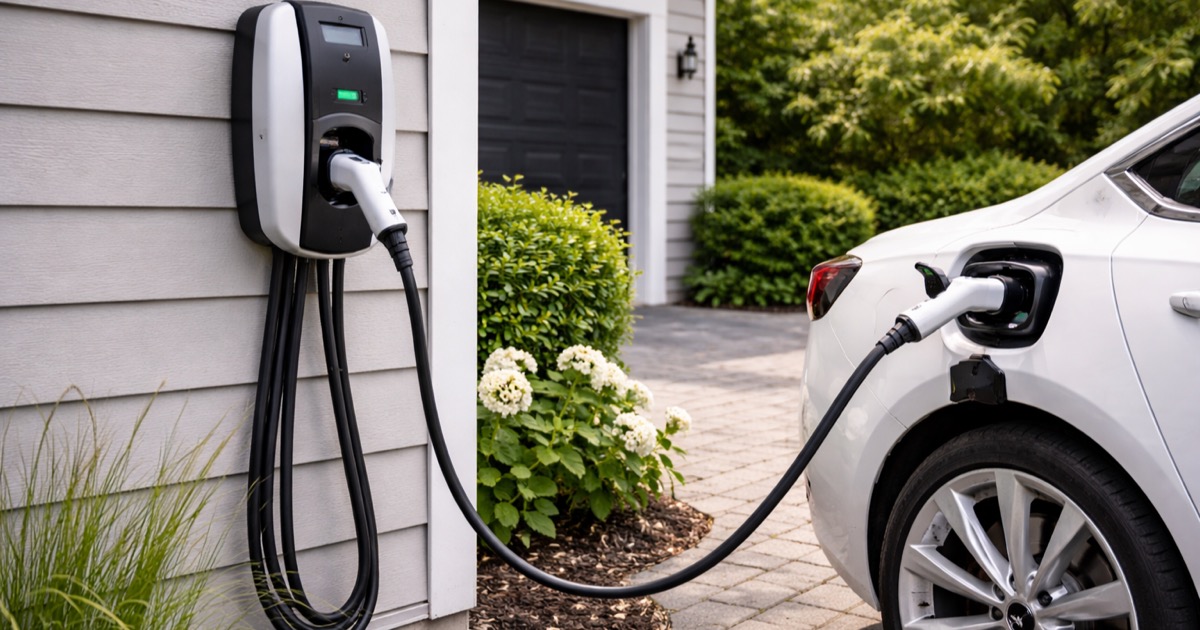
Installing a home electric vehicle (EV) charger is one of the most practical upgrades for EV drivers. A dedicated 7 kW wallbox charger can fully charge most electric cars overnight, far faster than a standard 3-pin socket (which takes 24–40 hours for a full charge).
Home charger installation in the UK typically costs £700–£1,500, including the charger unit and installation by an OZEV-authorised installer. Most installations take just 2–4 hours. The cost includes a smart charger with app control, scheduled charging, and the ability to use off-peak electricity tariffs.
The UK government previously offered a £350 grant for home chargers (now closed for houses), but the EV Chargepoint Grant still provides up to £350 towards installation for flat owners and rental landlords. Many energy suppliers also offer subsidised or free charger installation as part of EV-specific tariff deals.
Know someone considering this project?
Share this cost guide in 5 seconds.
Calculate your estimated costs
This is an estimate based on average 2026 prices. Actual costs may vary. Always request multiple quotes for an exact price.
Cost factors
EV charger installation costs in the UK depend on charger type and installation complexity.
- 7 kW smart wallbox (supply and install): £700–£1,200
- 22 kW three-phase charger (supply and install): £1,000–£2,000
- Cable run from consumer unit: £100–£400
- Consumer unit upgrade (if needed): £300–£1,000
- External trunking or underground cable: £150–£500
Most detached and semi-detached homes with a garage or driveway can be installed for £700–£1,000. Properties requiring long cable runs, consumer unit upgrades, or complex routing cost £1,200–£1,500+.
Why do prices vary?
- Distance from consumer unit: Longer cable runs require more materials and labour. A run of over 10 metres adds significantly to the cost.
- Three-phase vs single-phase supply: Most UK homes have single-phase supply, limiting charging to 7 kW. Three-phase supplies (common in some areas) allow 22 kW charging.
- Consumer unit capacity: Older consumer units may need upgrading to accommodate the new dedicated circuit. This adds £300–£1,000.
- Charger brand and features: Brands like Ohme, Zappi, and Pod Point offer smart features including solar integration, load balancing, and off-peak scheduling.
- Ground floor flat or rental: The EV Chargepoint Grant (up to £350) applies to flat owners and rental landlords — verify eligibility with your OZEV-authorised installer.
- OZEV authorisation: Installers must be OZEV-authorised to claim the government grant on your behalf. Always verify.
Subsidies & incentives
The EV Chargepoint Grant provides up to £350 (covering 75% of costs) for flat owners and rental landlords installing EV chargers. Application is managed by your OZEV-authorised installer. VAT is charged at 5% on EV charger installation for domestic properties (reduced rate). Some energy suppliers (Octopus Energy, OVO) offer free or subsidised chargers with EV-specific tariffs.
Regional price differences
Choose a city to view local prices and availability.
Is your city not listed?
View all electrical professionalsFrequently asked questions
Related cost guides
Cavity wall insulation
Cavity wall insulation in the UK costs £700–£2,500 but may be free through ECO4. Find out if your home has cavity walls...
Smart home installation
Smart home installation in the UK costs £500–£15,000 depending on scope. From smart heating controls to full KNX automat...
Electrical panel replacement
A consumer unit (fuse board) replacement costs £500–£1,500 in the UK. Find out when you need a new one, what's involved,...