
EV charger installation in Philadelphia
Prices are valid for 2026 and are indicative
Here you can see what ev charger installation in Philadelphia costs on average. We explain what the price consists of and which local factors have the biggest impact.
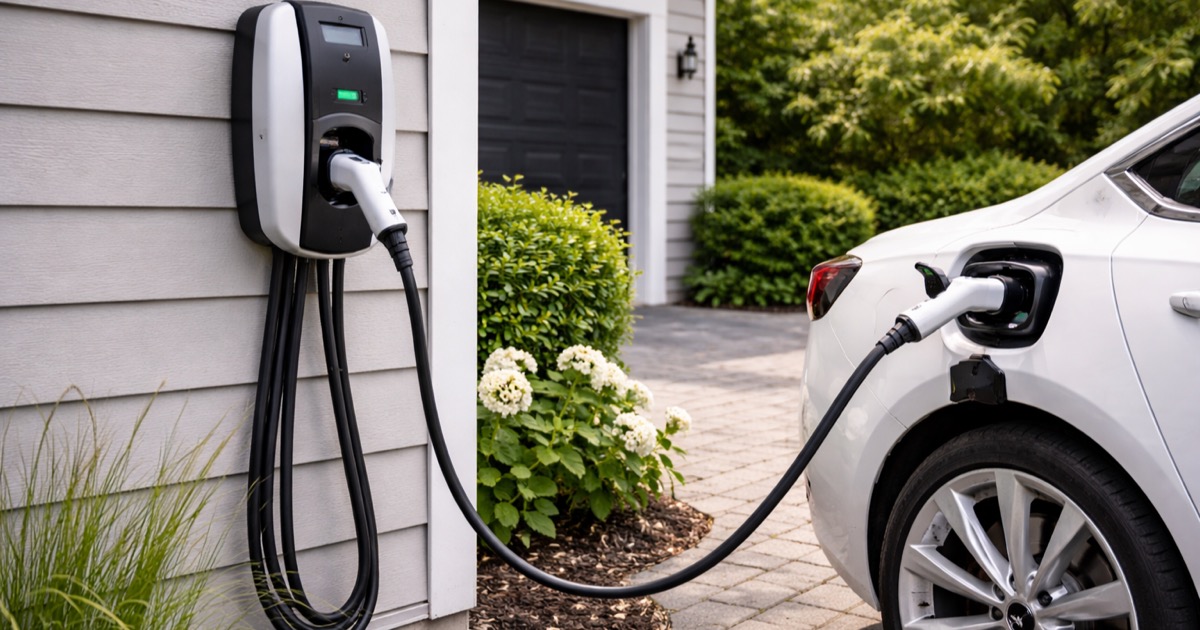
Price indications range between $1,400 and $3,500 per installation, based on current 2026 market data. The price is determined by the type of charger (single-phase or three-phase), the necessary adjustments to the fuse box, the length of the cabling, and whether excavation work is required for a garage or driveway. Modern smart chargers also offer options for bi-directional charging (V2H: Vehicle to Home), where the car acts as a home battery.
Know someone in Philadelphia considering this project?
Share this local price indication in 5 seconds.
Local price
$800 - $3,000
Average price
Average response time
-
No response time known yet
Calculate your estimated costs
This is an estimate based on average 2026 prices. Actual costs may vary. Always request multiple quotes for an exact price.
Cost factors
The total cost usually consists of:
- Charging station and hardware: 30-45% of the total
- Installation and cabling: 30-40% of the total
- Fuse box and meter cupboard adjustments: 10-20% of the total
- Excavation and wall penetrations (if needed): 5-15% of the total
These percentages can vary depending on the cable length, the condition of the fuse box, and whether excavation work is required.
Why do prices vary?
- Single-phase or three-phase connection: A single-phase charger charges at a maximum of 7.4 kW; a three-phase charger up to 22 kW. For fast home charging, a three-phase connection is preferred, but it also requires adjustments to the meter cupboard.
- Smart charging: A smart charger integrates with an energy management system and schedules charging based on electricity tariffs, solar output, or grid capacity.
- Distance to the meter cupboard: The longer the cable route from the meter cupboard to the charging station, the higher the material and labor costs. For a detached garage, excavation work is usually required.
- Bi-directional charging (V2H/V2G): Newer V2H-compatible chargers allow you to feed stored energy from the car back into the home network, which can further reduce energy costs.
Subsidies & incentives
Installing an EV charger at home can qualify for a federal tax credit that reduces the cost significantly.Alternative Fuel Vehicle Refueling Credit (IRA Section 30C)Amount: 30% of costs, up to $1,000 for residential installationsRequirement: charger must be at your primary residence in an eligible census tract (low-income or non-urban area)Includes: charger equipment and installation costsCheck eligibility for your address using the IRS census tract tool. Many utilities also offer EV charger rebates of $200–$500 and reduced electricity rates for off-peak charging.
Local considerations in Philadelphia
Average (baseline)Average pricing with more historic row houses than any US city and aging infrastructure throughout
Housing characteristics in Philadelphia
Philadelphia has more row houses than any other US city, with many dating to the 18th and 19th centuries. Aging infrastructure across the city requires frequent updating of plumbing, electrical, and structural systems. Despite sharing similar historic housing challenges with neighboring New York and Boston, Philadelphia remains meaningfully more affordable for both homeowners and contractors.
- most row houses of any US city
- 18th and 19th century housing stock
- more affordable than neighboring NYC and Boston
- standard permitting and code requirements
- broad selection of local and regional contractors
- typical scheduling availability throughout the year
- cable length, fuse box capacity, and excavation work partly determine installation costs
- Section 30C tax credit of $350 available for smart home chargers for private individuals
Handymen for EV charger installation
Are you a professional?
Join the network and receive new requests.