
What does an ADU cost in the US in 2026?
Last updated: April 2026
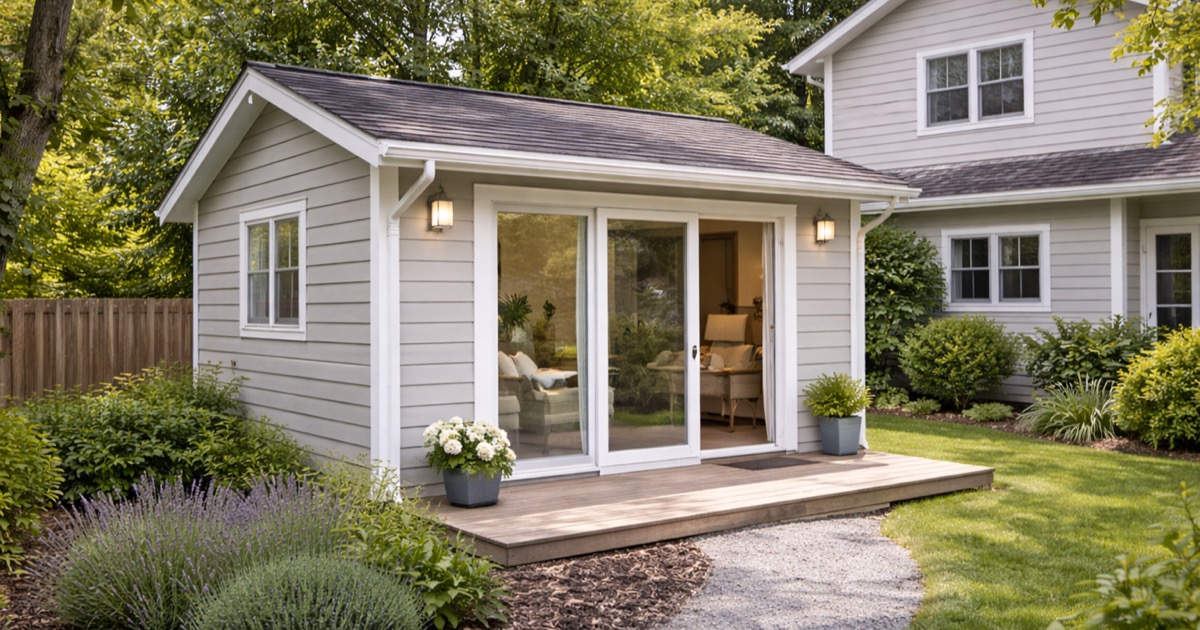
An ADU (Accessory Dwelling Unit) is a self-contained residential unit built on the same lot as a primary home. ADUs are used for rental income, multigenerational living, a home office, or housing an aging parent or adult child. Demand has surged in recent years, driven by housing shortages and rising rents. California leads the country with streamlined ADU laws, while states like Texas, Colorado, Washington, and Florida are rapidly expanding their ADU-friendly regulations.
ADU costs in the US range from $80,000 to $300,000, depending on type, size, location, and finish level. A garage conversion or basement conversion is typically the most affordable option, while a new detached backyard unit is the most expensive. Prefab and modular ADUs fall in between and offer shorter construction timelines. Beyond the unit itself, budget for foundation work, utility connections (water, electricity, sewer), permit fees, and design costs.
Know someone considering this project?
Share this cost guide in 5 seconds.
Calculate your estimated costs
This is an estimate based on average 2026 prices. Actual costs may vary. Always request multiple quotes for an exact price.
Cost factors
The total cost usually consists of:
- Housing unit (shell or turnkey): 55-70% of the total
- Foundation (screw piles or concrete slab): 10-15% of the total
- Utility connections (electricity, water, sewage): 8-15% of the total
- Site preparation, path, and exterior finishing: 5-10% of the total
These percentages can vary depending on soil conditions, distance to existing connections, and the chosen finish level.
Why do prices vary?
- Prefab versus traditionally built: Prefab care annexes ($80,000-$130,000) are placed quickly, well insulated, and immediately habitable in turnkey form. Traditionally built extensions offer more customization in size and architecture but cost more ($120,000-$200,000) and take longer.
- Finish level: shell versus turnkey: A shell delivery includes the structure, insulation, and facade but no bathroom, kitchen, or flooring. Turnkey means fully finished and ready to occupy. The price difference can be $20,000-$40,000, depending on finish quality.
- Foundation and soil conditions: Screw pile foundations are fast, relatively affordable ($5,000-$10,000), and suitable for soft peat soils. A concrete slab or driven piles costs $10,000-$25,000 but is necessary for certain soil types or larger units.
- Utility connections and permits: The distance from the ADU to existing water, electricity, and sewer connections largely determines hookup costs ($5,000-$20,000). Permit fees vary widely by municipality ($5,000-$25,000). Many states have streamlined ADU permitting — California requires most cities to approve or deny within 60 days.
Regional price differences
Choose a city to view local prices and availability.
Is your city not listed?
View all masonry professionalsFrequently asked questions
Related cost guides
Home extension
Home addition costs in the US in 2026. Price per square foot, permits, and construction timelines for room additions.
Dormer installation
Discover dormer addition costs in the US in 2026. Full breakdown of prices, factors, and tips for shed, gable, and hip d...
Wall plastering
Wall plastering and skim coating costs per m² in the US in 2026. Compare materials, finishes, and labor rates.